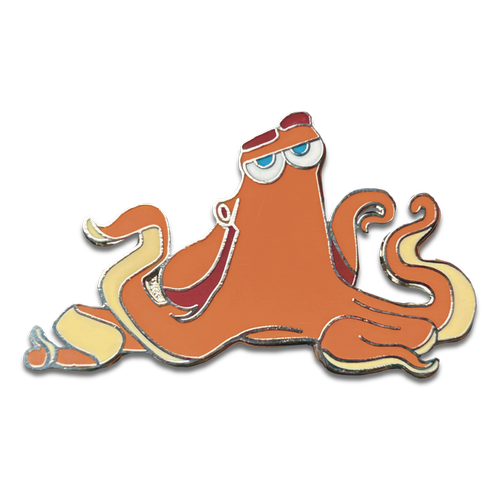
There isn’t one universally enforced definition of “scrapper” across pin communities, especially because the word is used heavily in Disney trading, where the market is also flooded with counterfeits and unauthorized runs. Several community references explicitly note that “scrapper” gets used as an umbrella term for non authentic pins while also describing a narrower category called “factory scrappers” (QC rejects that were supposed to be discarded).
What “scrappers” means and why the term causes confusion...
Factory scrapper (QC reject / factory scrap): A pin made for an official run that did not pass quality standards and was intended to be destroyed or disposed of, but instead entered the secondary market without authorization.
Counterfeit / fake / knockoff: A pin made without permission to imitate a real design (sometimes extremely convincingly). Community sources often describe these as separate from “true” scrappers, even though everyday conversation blurs the terms.
“Seconds” / B-grade pins: Pins sold openly by the maker/brand as discounted stock due to minor imperfections (scratches, small bubbles, slight color variance, small fill issues).
Low QC (but still “passed”): Even official sellers can ship pins with imperfections that arguably “shouldn’t have passed.” Collectors discuss this explicitly: a pin can be sold by the licensor while still reflecting weak QC.
Scrapper myth or fact?
Pick Myth or Fact for each. (This is meant to be helpful—not a perfect “authenticity test.”)
“Scrappers are always knockoffs.”
“A QC reject can exist, and still be unauthorized to sell or trade as ‘authentic.’”
“B-grade pins are real pins sold at a discount because of minor imperfections.”
“If it’s soft enamel, it must be a scrapper.”
“One flaw is enough to prove a pin is a scrapper.”
Score: 0 / 5
How pin QC works and where imperfect pins come from...
Most enamel pin production pipelines have multiple “failure points” where defects can happen, and most factories include a last step inspection where pieces that don’t meet spec are supposed to be removed. One manufacturing explainer describes a typical flow: die/mold creation, stamping, trimming, electroplating, enamel fill + firing, buffing/polishing, and attachment of the backing.
After manufacturing, many pin creation guides describe final inspection as checking for flaws, sharp edges, and other issues before packaging.
A big reason “scrapper vs low QC vs B grade” gets muddy is that the same type of defect can appear in any category, the difference is what happens next (discarded vs disclosed as seconds vs shipped anyway).
Why hard vs soft enamel keeps showing up in scrapper conversations...
Collectors often use texture as a quick clue, so it’s worth explaining clearly (without implying “soft = fake”):
Hard enamel is commonly described as enamel filled and then polished flush with the metal lines, creating a smooth, jewelry like surface.
Soft enamel is commonly described as recessed enamel below raised metal lines, producing a textured/dimensional feel.
Neither style is “more authentic” by itself; they’re manufacturing/finish choices. But the surface differences do affect how imperfections show up (scratches, underfill visibility, edge feel), which is why soft vs hard gets dragged into scrapper debates.
Interactive mini quiz
Which pin is a scrapper?
Tap a pin to guess
Make a guess to see feedback here.
Scrappers vs B-grades vs low-QC pins...
A pin can be imperfect for three very different reasons:
A B grade/seconds pin is usually imperfect on purpose (disclosed): it’s sold transparently at a discount because it has minor aesthetic flaws. Examples listed by pin sellers include slight color discrepancies, tiny scratches, small bubbles, or minor fill issues.
A low QC pin is imperfect but still sold as normal: it “passed” or slipped through inspection. Communities even note cases where licensed sellers ship pins that arguably shouldn’t have passed QC.
A scrapper (factory reject that escaped) is imperfect and not authorized to exist in market: a QC reject is supposed to be removed from the legitimate supply chain, but ends up sold anyway (without permission).
Scrappers aren’t automatically “duplications.” In the narrow “factory scrapper” meaning, they may come from the same intended production ecosystem, yet still be non authorized goods in the market.
Are Uglies Scrappers?
Not necessarily.
“Uglies” usually means: lower trade value, less in demand designs, common pins, or pins someone simply doesn’t want right now.
That’s a *preference/value* category, not a manufacturing category.
So: an ugly can be perfectly authentic, and a scrapper can be highly desired (rare, interesting, or just a design someone loves).
We believe pin collecting should feel fun, not stressful.
That’s why we focus on: clear product descriptions, consistent quality standards, and being transparent about what you’re buying.
If we ever sell discounted pins (seconds/B grades), we’ll label them clearly so you’re not guessing.
Test Your Pin!
Use this quick guide to check if your pin is likely authentic or a scrapper.
Run a finger along the pin's edge. Is the edge smooth (no sharp or rough spots)?
If the edges are sharp or poorly finished, the pin was not made to typical Disney-quality standards. Authentic pins have smooth edges, so a rough edge is a strong sign of a scrapper (counterfeit).
Outcome: The pin is likely a scrapper.
Disclaimer: This flowchart is a guide and may not be 100% accurate. Some genuine pins have minor flaws, and some counterfeits are very convincing. The only way to be completely sure is to buy pins directly from Disney or authorized retailers. Always combine multiple signs and your best judgment.
Does the pin have a small Hidden Mickey icon on the front? (This identifies a Hidden Mickey/Cast Lanyard pin series.)
You indicated the pin is a Hidden Mickey series pin.
Examine the Hidden Mickey icon on the front. Is the Mickey head icon well-defined (clear, distinct ears and head)?
A Hidden Mickey symbol that is melted, blobby, or lacks clear definition is a strong sign of a counterfeit pin. Authentic Hidden Mickey pins have a sharp, well-defined Mickey icon.
Outcome: The pin is likely a scrapper (fake).
Disclaimer: This flowchart may sometimes misidentify pins. Disney’s quality control issues can cause authentic pins to have minor imperfections, and a few counterfeits are nearly indistinguishable from real pins. Always consider context and additional evidence when evaluating a pin.
Flip the pin to its back. Does the Mickey waffle pattern on the back extend fully to the edges (no obvious border)?
An authentic Hidden Mickey pin should have the Mickey pattern reach the edge. A border around the waffle pattern on a Hidden Mickey/Cast Lanyard pin almost always means it’s a scrapper.
Outcome: The pin is likely a scrapper.
Disclaimer: Use this flowchart carefully. Rarely, a genuine pin might exhibit unusual traits due to manufacturing variations, and not all fakes are obvious. When in doubt, consult multiple sources or experts. Disney pins have been produced for decades, and standards and designs have changed over time, so consider the pin’s origin as well.
Compare the pin’s colors and details to known authentic images. Are the colors correct and all design details properly filled in? (No significant color errors or missing paint areas)
Obvious color mistakes or missing enamel are strong indicators of a counterfeit. For example, missing fill in eyes or off-hue colors (e.g. a greenish skin tint instead of proper color) suggest a scrapper pin.
Outcome: The pin is likely a scrapper.
Disclaimer: This tool provides guidance based on common signs, but it is not foolproof. Authentic pins can occasionally have color variations (for example, different batches or international releases), and counterfeiters constantly improve their products. Always double-check with official references for final confirmation.
Inspect the text on the back of the pin. Are all the back stamps (copyright, Disney logo, series number) clear and error-free (no typos, not badly printed or off-center)?
Typos, misspellings, or messy text on the back are a big giveaway of a fake pin. Authentic pins have clean, correctly spelled and well-aligned back stamps. For instance, the official Disney Pin Trading logo should be crisp and centered; if you see oddly spaced or merged letters or an extra border around the logo, that’s a red flag.
Outcome: The pin is likely a scrapper.
Disclaimer: While printing mistakes usually mean a pin is fake, remember that even Disney’s factories have had errors in the past. Always weigh multiple factors together. This flowchart should not be your only test; consider where the pin was obtained and if it matches known authentic examples.
Does the pin feel unusually light or flimsy for its size? (Counterfeit pins often use cheaper metal and weigh less than they should.)
Authentic Disney pins are often made of higher-quality metal and feel weighty. If a pin feels very light or cheaply made, it’s likely a scrapper. Counterfeit pins commonly use inferior metal, making them lighter than genuine pins.
Outcome: The pin is likely a scrapper.
Disclaimer: Judging weight can be subjective without a comparison. Use this sign in combination with others. Due to manufacturing tolerances, a slight weight difference alone may not prove a fake, but a markedly flimsy feel is usually a bad sign.
Does the pin strongly attract a magnet? (Most modern authentic Disney pins are made with non-magnetic alloys, so a magnet test can reveal cheap metal.)
Authentic Disney pins (especially those made in the last decade+) are typically non-ferrous and will NOT stick strongly to a magnet. If your pin is attracted to a magnet, it likely contains iron/steel, indicating a counterfeit. (Very few genuine pins are magnetic – those are rare exceptions.)
Outcome: The pin is likely a scrapper.
Disclaimer: The magnet test is a useful indicator but not absolute. A few legitimate older pins might be magnetic, and some high-quality fakes might use non-magnetic metal. Consider the magnet result alongside other clues before concluding.
All checks so far have not revealed any major red flags. The Hidden Mickey icon is crisp, the colors and details look correct, the back stamp is clean, the pin’s weight and metal seem right, and nothing obvious is amiss.
Outcome: The pin is likely authentic. No typical scrapper signs were observed.
Remember: even authentic pins can occasionally have minor paint dips or quirks. Conversely, extremely good counterfeits exist, though uncommon. Given the evidence, your pin appears genuine.
Disclaimer: This flowchart provides an educated guess, not a guarantee. Disney’s quality control issues (and variations in older or overseas pins) mean some real pins might look “off”, and some fakes can look very convincing. Always use multiple sources of information when verifying a pin’s authenticity.
Flip the pin to its backside. Do you see a repeating Mickey head waffle pattern across the back of the pin?
You indicated the pin has the classic Mickey waffle pattern on the back (commonly used on official Disney Parks pins).
Does the Mickey waffle pattern run off the edge of the pin? (In other words, is there NO border around the pattern?)
A visible border around the waffle pattern is often a red flag for fakes. However, note that some genuine open edition Disney pins have a slight border due to manufacturing variances. We need to check further details to be sure.
Are the pin’s colors and enamel quality good? (No obvious low-quality enamel issues like large dips, missing areas, or clearly wrong colors?)
Are the pin’s colors and enamel quality consistent with a high-quality Disney pin? (No obvious dips in enamel, no sections missing paint, and no clearly incorrect color tones)
Check the back stamps and text. Is all the back text (Disney copyright, logo, edition info if any) present, clearly stamped, and error-free?
Check the back stamp text. Are the Disney logos, copyrights, and any other markings clean and correct (no misspellings, not faint or off-center)?
Does the pin feel significantly lighter or cheaper than expected for its size?
Does the pin feel unusually light or thin (as if made with cheap metal)?
Does the pin stick to a magnet? (Official Disney park pins are usually non-magnetic.)
Does the pin strongly attract a magnet? (Most authentic pins won't.)
We observed a border on the waffle pattern, but aside from that, no major red flags were found. Some authentic Disney pins (especially older or open edition ones) can have a slight border on the back pattern, so this alone doesn’t confirm a fake.
Outcome: The pin is likely authentic.
All other indicators (color, print, weight, etc.) appeared normal for a genuine pin, suggesting that despite the border, the pin is probably legitimate.
Disclaimer: Authentic pins can sometimes deviate from the norm (for example, a factory border or minor flaw), and conversely, some fakes mimic authenticity very well. This result is an educated guess – consider verifying the pin’s details (release info, origin) if you need absolute certainty.
No obvious signs of counterfeiting were found. The pattern goes to the edge, colors/enamel are good, back text is correct, weight feels right, and the pin isn’t magnetic – all consistent with an authentic Disney pin.
Outcome: The pin is likely authentic.
Minor imperfections can still occur on real pins (even new ones might have tiny defects that slipped through quality control). Given the checks you’ve done, your pin appears genuine and of normal Disney quality.
Disclaimer: This flowchart provides a best-effort assessment. It may occasionally misidentify a pin due to unusual legitimate variations or highly accurate fakes. When in doubt, cross-reference the pin with official catalogs or seek expert opinions.
You indicated the pin’s back does not have the Mickey icon pattern.
Does the back have a crown pattern (rows of tiny crown icons)? (This is typical for Loungefly-produced pins.)
The back has a crown pattern, which is used on officially licensed Loungefly Disney pins. Loungefly pins (sold at retailers like BoxLunch/Hot Topic) feature this crown texture on top with Disney/Funko/Loungefly stamps below.
Outcome: The pin is likely an authentic Loungefly (licensed) pin.
Very few Loungefly pins have been counterfeited so far. A known giveaway of a fake Loungefly pin is if it has a Mickey waffle back instead of the crown pattern. In your case, the presence of the crown design indicates it’s likely genuine.
Disclaimer: Loungefly pins are officially licensed but not produced by Disney’s in-house factories. They may have minor quality differences from parks pins, and this flowchart’s focus is primarily on Disney park pins. Use additional judgment if needed, but a correct Loungefly back pattern and stamping is a strong sign of authenticity.
Does the back have a pattern of recycle symbol icons (♻️) in the metal? (This is commonly found on pins made by Uncas International, another official Disney licensee.)
The back has recycle symbols, which is a signature of Disney pins produced by Uncas International. Uncas pins (often sold through BoxLunch, Amazon, etc.) typically have a half recycle-pattern back with the Disney logo and copyright info below.
Outcome: The pin is likely an authentic Uncas International Disney pin.
At present, there are not many reports of counterfeit Uncas pins. If the pin has the expected Uncas back stamp and texture, it's probably genuine.
Disclaimer: Uncas International pins are official but outside the Disney Parks production. They may not always match the quality of park pins, and this chart doesn’t cover all their quirks. Nonetheless, if all markings line up with known Uncas characteristics, the pin is very likely real. Always verify suspicious details with the pin community if unsure.
Your pin’s back does not have Mickey, crown, or recycle patterns. This is not unusual for certain authentic pins:
Many older Disney pins (generally pre–late 2000s) have smooth or unique back textures instead of the Mickey waffle.
Some special pins have their own patterns (for example, Walt Disney Imagineering pins use Sorcerer hat patterns; Disney Studio Store Hollywood pins often use an ice cream cone pattern, or even a Mickey waffle with an intentional border).
If your pin is from a vintage set or a limited release, not matching the “normal” back pattern could be expected. Check for an official copyright stamp or Disney logo on the back; authentic pins usually have them (though very old ones might not). If the back has official Disney markings and the overall quality looks decent, the pin could well be authentic for its category.
However, if the pin lacks any Disney markings, has a plain back, and looks cheaply made, it might be a fantasy or bootleg pin (unofficial fan-made) or a counterfeit of a design that predates waffle backs. These non-official pins can sometimes be mistaken for scrappers, but they were never Disney-produced to begin with.
Outcome:Uncertain. The pin doesn’t fit standard patterns, but it could be a legitimate Disney pin from a specific series or era, or it could be unofficial.
At this stage, further research is recommended. Try to identify the pin via online databases (PinPics, Disney Pins Database) or ask experienced collectors. They might recognize the pin and confirm if its back design is normal for that release.
Disclaimer: This flowchart covers common cases. Pins that fall into the “other” category require case-by-case research. The absence of a Mickey waffle does not automatically mean fake, and a pin that looks different might be a rare authentic variant. Always use community resources and official references when in doubt about an unusual pin.
If you’re ready to skip the uncertainty and just find pins that make you happy, you’re in the right place.